
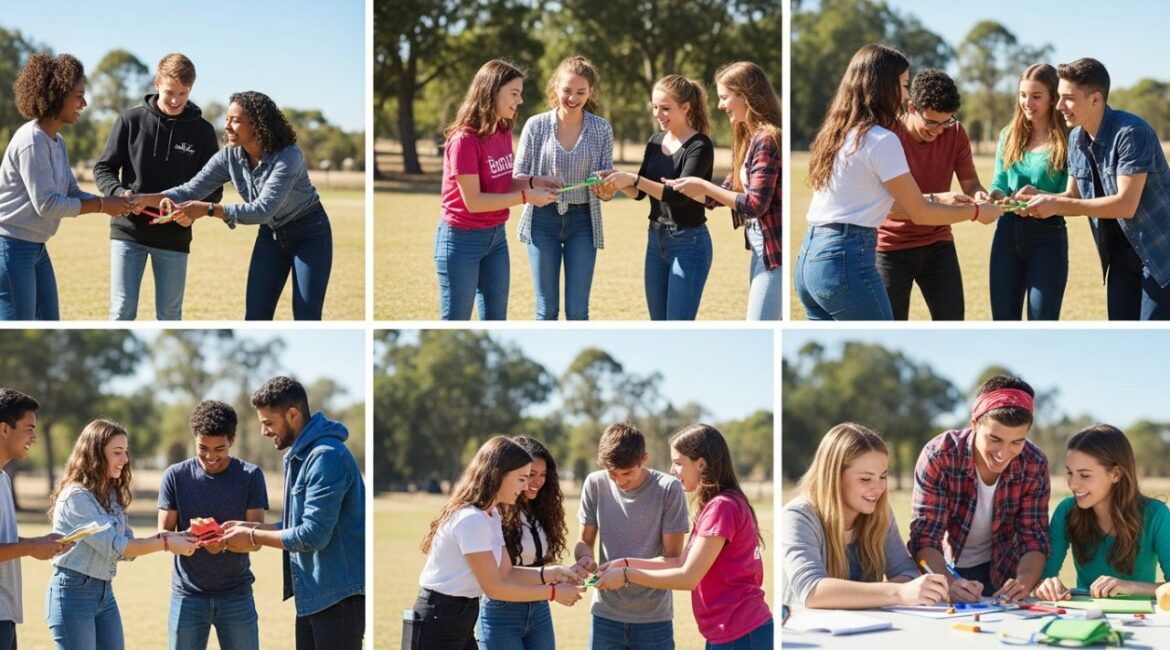
Team building activities for teenagers play an essential role in enhancing social skills and communication. Engaging in these activities can improve collaboration, trust, and creativity among peers. From steering through a “Blind Maze” to participating in a “Great Egg Drop,” each activity offers distinct benefits. Comprehending how to implement these fun exercises effectively can make a significant difference in their development. Let’s explore some engaging options that can promote teamwork and create memorable experiences.
Key Takeaways

- Mystery Box Challenge: Teams collaborate to create a project using random items, fostering creativity and teamwork.
- Scavenger Hunt: Participants work together to solve clues, promoting strategic planning and cooperation.
- Trust Fall: This classic exercise builds trust and strengthens peer relationships through reliance on teammates.
- Human Bingo: Encourages interaction by having teens find peers with specific traits or experiences, enhancing social skills.
- Emoji Storytelling: Participants craft stories using emojis, promoting creativity and collaboration in a fun format.
The Importance of Team Building Activities for Teens

Team building activities for teens play a crucial role in their social development, especially as they navigate the challenges of adolescence. These activities improve social skills by promoting communication, collaboration, and trust among peers. Engaging in fun team bonding activities for teens helps combat isolation often caused by excessive screen time, nurturing real human connections through face-to-face interactions.
Moreover, participation in these activities encourages the development of leadership qualities and decision-making skills, which are critical for personal growth and future success. By challenging you to step out of your comfort zone, team building activities for teens promote resilience and adaptability, preparing you for various life situations.
Furthermore, improved group dynamics lead to increased participation and better academic performance, showcasing the significance of these activities in educational settings. Overall, team building activities set the foundation for crucial life skills that will benefit teens throughout their lives.
Benefits of Fun Team Building Activities

Fun team-building activities offer several key benefits that can greatly improve your experience as a teenager.
By participating in these activities, you’ll improve your communication skills, nurturing stronger peer relationships that are crucial for effective collaboration.
Furthermore, engaging in teamwork not just builds trust among your peers but also develops your ability to work together for common goals, which is fundamental for both academic and social success.
Enhanced Communication Skills
Effective communication is an essential skill that can be greatly improved through engaging in team-building activities. Team building activities for teens, like “Blind Maze” and “Reverse Charades,” promote face-to-face interactions, helping you articulate thoughts clearly during listening actively to peers.
These team bonding games for teenagers encourage dynamic exchanges of ideas, enhancing both verbal and non-verbal communication techniques. When you participate in strategic tasks, such as the “Puzzle Race” or “Scavenger Hunt,” you practice articulating strategies and negotiating roles, further refining your communication abilities.
Furthermore, games focusing on non-verbal cues, like “Silent Charades,” deepen your comprehension of body language, vital for effective interpersonal communication. Regular involvement in these activities improves group dynamics, leading to better collaboration and fewer misunderstandings.
Stronger Peer Relationships
Participating in team-building activities not just improves communication skills but also cultivates stronger peer relationships among teenagers. Engaging in fun team building activities for teens helps you develop vital social skills, promoting trust and collaboration within your group.
When you participate in these activities, you’re more likely to connect with peers, improving your sense of belonging and community. Shared experiences during challenges and successes allow you to bond with others, strengthening your interpersonal connections.
Furthermore, collaborative problem-solving improves empathy and comprehension, which are significant for healthier relationships. By focusing on enjoyable interactions, these team building activities for teenagers create an environment where friendships thrive, eventually leading to a supportive network among peers that can last well beyond the activities themselves.
Teamwork and Collaboration
Teamwork and collaboration are fundamental skills that can greatly benefit teenagers, especially when developed through enjoyable team-building activities. Engaging in these activities helps teens improve their communication skills, leading to better interactions.
Here are three key benefits of team-building activities for teens:
- Trust Building: Fun teamwork activities for high school students create a supportive environment that encourages risk-taking and open dialogue among peers.
- Problem-Solving: As they navigate challenges together, teens enhance their critical thinking and collective decision-making abilities.
- Social Skills Development: These activities promote face-to-face connections, allowing teens to develop important social skills that are crucial for future collaboration.
Tips for Working With Teenagers

When working with teenagers, it’s crucial to understand their need for social connections, as they often feel isolated in a digital world.
Honoring their choices and encouraging open communication can cultivate a sense of autonomy, making them more engaged in team-building activities.
Understand Social Connections
Comprehending social connections among teenagers is vital for cultivating an environment where they can thrive both personally and socially.
To support their development, consider these strategies when planning team building activities for teens:
- Encourage Face-to-Face Interactions: Limit screen time and promote environments that facilitate personal connections through engaging, fun group activities for teens.
- Promote Autonomy: Design programs that resonate with their interests, allowing them to take ownership of their experiences and actively participate.
- Create an Inclusive Space: Establish a safe atmosphere where teens can freely express themselves, facilitating meaningful interactions that improve trust and collaboration.
Honor Their Choices
Honoring the choices of teenagers is vital for nurturing their engagement and sense of ownership in team-building activities. When you provide teens with the opportunity to choose from various group activities for teens, you promote a sense of agency that boosts their motivation.
Incorporating their input during program design guarantees that the activities resonate with their interests, making participation more appealing. Respecting individual preferences cultivates a safe space where teens feel valued, encouraging them to express themselves openly.
This acknowledgment of their desire for autonomy leads to more meaningful interactions and strengthens connections within the group. In the end, honoring their choices not just improves enthusiasm but also creates a dynamic environment that benefits all participants in team building for teens.
Encourage Open Communication
Creating an environment that promotes open communication is vital for effective team-building activities with teenagers. When you cultivate a safe space, teens feel comfortable expressing their thoughts without fear of judgment.
Here are some tips to improve communication during team building activities for high school students:
- Practice Active Listening: Show that you value their opinions by genuinely listening and validating their experiences.
- Incorporate Icebreakers: Use team bonding games for teens to break down barriers and encourage honest dialogue among participants.
- Encourage Feedback: Regularly ask for input during activities to guarantee teens feel heard, reinforcing a culture of open communication.
Engaging Team Building Activities

Engaging team-building activities are essential for teenagers, as they not just encourage collaboration and communication but furthermore help develop important social skills. Activities like “Human Knot” and “Blind Maze” improve problem-solving skills as they create a fun environment that promotes teamwork.
Movement-based challenges, such as “Balloon Tower” and “Egg Drop,” keep energy levels high, ensuring participants stay actively engaged. For those looking for creative outlets, activities like “Mystery Box Challenge” and “Emoji Storytelling” promote collaboration and allow teens to express their imagination collectively.
Trust-building exercises, including “Trust Fall” and “Electric Fence,” further strengthen relationships among peers, promoting a sense of belonging within the group.
These engaging team-building activities for teens not only facilitate social interaction but create memorable experiences that high school students can carry with them beyond the classroom, improving their interpersonal skills for future endeavors.
Creative Icebreaker Games

How can creative icebreaker games transform the initial moments of a group gathering? These activities are designed to promote immediate engagement and connection among participants, setting a positive tone for the event.
Utilizing creative icebreaker games as part of your team building activities for teens can break down barriers and encourage participation. Here are three effective options:
- Two Truths and a Lie: Participants share interesting facts about themselves, prompting conversation and rapport-building.
- Human Bingo: This game encourages interaction as teens seek common interests, enhancing social skills in a fun atmosphere.
- Emoji Storytelling: Using visual prompts, teams express their creativity, facilitating collaboration and laughter during the development of narrative skills.
Incorporating humor and play into these icebreaker games can greatly reduce anxiety, making it easier for teens to connect with one another and engage in meaningful interactions.
Active and Outdoor Team Building Challenges

Active and outdoor team-building challenges play a crucial role in nurturing teamwork and collaboration among teenagers, particularly as they provide an antidote to the increasingly sedentary lifestyles often associated with technology use. Engaging in activities like scavenger hunts and geocaching not just encourages physical activity but also promotes cooperation and strategic planning.
Outdoor challenges, such as the Great Egg Drop or Balloon Tower Construction, stimulate creativity and problem-solving skills, allowing teams to innovate with limited resources. Moreover, trust-building exercises like the Trust Fall and Electric Fence require participants to rely on one another, enhancing communication skills and strengthening interpersonal relationships.
Incorporating movement into these team-building activities for teens keeps energy levels high and engages them in healthy physical challenges. Overall, these active and outdoor team-building challenges reinforce the importance of teamwork in achieving common goals as they combat the lure of screen time.
Reflecting on Team Building Experiences

Reflecting on team-building experiences is fundamental for teenagers, as it provides them with the opportunity to evaluate their communication skills and pinpoint areas where they can improve collaboration with their peers.
Engaging in reflection after team building activities for teens improves comprehension of group dynamics and helps recognize the importance of trust and support in successful teamwork.
Here are three key benefits of reflection:
- Improved Communication: Teens can assess how effectively they expressed ideas and listened to others, identifying areas for growth.
- Heightened Emotional Intelligence: Articulating feelings cultivates empathy and comprehension, vital for teamwork teens.
- Resource Creation: Documenting reflections through journaling or discussions creates a valuable resource for future activities, highlighting successful strategies and lessons learned.
Frequently Asked Questions

What Are Some Team Building Activities for Teens?
To promote teamwork among teens, consider activities like Scavenger Hunts, where they strategize and solve clues together.
Engage them in the Human Knot to improve communication and trust, or organize puzzle races that require collaboration under pressure.
Creative challenges, such as the Great Egg Drop, encourage innovative problem-solving.
Incorporating games like Reverse Charades can boost non-verbal communication, whereas Emoji Storytelling encourages creativity and connection through shared experiences.
Each activity builds crucial skills for effective collaboration.
What Are Some Fun Creative Activities for Teens?
You can engage in various fun creative activities as a teenager.
Try the Mystery Box Challenge, where you create a skit using random items.
Emoji Storytelling encourages you to craft narratives with emojis, enhancing your imaginative skills.
For a puzzle challenge, compete in a Puzzle Race, completing sections of a jigsaw.
The Great Egg Drop lets you design protective contraptions for an egg, whereas Balloon Tower Construction involves building the tallest tower using only balloons and tape.
What Are the Fun Activities for Team Building?
In terms of fun activities for team building, consider engaging games like “Human Knot” and “Reverse Charades,” which promote collaboration.
Activities such as “Balloon Tower Construction” and “The Great Egg Drop” stimulate creativity and problem-solving.
For enhancing communication, try Spyfall or “Silent Charades.”
Outdoor options like Geocaching merge technology with teamwork.
Incorporating challenges like “Mystery Box” can create memorable experiences, encouraging active participation and strengthening team dynamics effectively.
What Is the 30 Second Game for Team Building?
The 30 Second Game is a team-building activity where you describe a word or phrase to your teammates in just 30 seconds, without using the actual term.
This game sharpens your communication skills, as you’ll need to think creatively and use synonyms. It encourages teamwork by requiring active listening and collaboration to guess the word before time’s up.
Versatile and adaptable, it suits various group interests and can fit into busy schedules easily.
Conclusion

Incorporating team-building activities for teenagers is vital for their development. These activities nurture fundamental skills like communication, trust, and collaboration, providing a platform for social interaction. By engaging in a variety of games, from icebreakers to outdoor challenges, teens can improve their problem-solving abilities and creativity. As you implement these activities, reflect on the experiences to understand their impact. In the end, effective team building can lead to stronger relationships and improved social dynamics among teenagers.
Image via Google Gemini
This article, “7 Fun Team Building Activities for Teenagers” was first published on Small Business Trends